
Hello lovely,
If your autumn wardrobe is suddenly looking amazing with a short skirt, white boots and slightly ridiculous little hat, then fashion has some explaining to do.
There is a distinctly Sixties mood knocking about again in 2026. Not one specific version of the decade either. We’re getting neat little skirt suits and pillbox hats at one end, short hems and graphic Mod shapes in the middle, then suede, fringing and bohemian textures sneaking in from the later part of the decade.


This is all rather handy because getting a bit of 1960s style into your wardrobe has never needed genuine vintage from head to toe. The British high street is full of shapes, colours and accessories that can be styled with a Sixties eye. The trick is to knowing what you’re looking for.
And knowing which part of the 1960s you actually like.
Why 1960s fashion is back for autumn 2026
I wouldn’t go as far as saying that autumn 2026 has become one enormous Swinging London tribute. Things don’t really work that way.
What we are seeing is several trends arriving at the same time that have very strong Sixties connections.
In an overview of the key autumn and winter 2026 trends, British Vogue points to a renewed interest in polished, more traditional “ladylike” dressing alongside more expressive colour and texture. Skirt suits are getting attention too, with British Vogue’s 2026 autumn skirt report highlighting new interpretations of classic matching skirts and jackets.
Then there is the mini. At McQueen’s autumn 2026 show, Seán McGirr told Vogue that he had been looking closely at Mary Quant. His version came with lower waists and enormous cargo pockets, but the Sixties reference was very much there. The result is a nice example of what I mean when I talk about wearing vintage style rather than simply recreating vintage clothes. Check out the McQueen autumn 2026 collection here.
Colour is having a good autumn too. Cobalt, chilli red, royal purple, green and pink all appear in Who What Wear’s autumn 2026 colour report, while white has reappeared amongst the year’s notable boot colours. Suddenly those bright little dresses, coloured tights and white boots of the Sixties are “in” again.
At the opposite end of the decade, suede is everywhere.British Vogue’s September 2026 suede guide points to the material at Max Mara, Dior and Hermès, as well as oversized brown suede jackets appearing in street style. A very convenient development if your preferred Sixties woman is less Mary Quant and more Marianne Faithfull wandering about in boots.Basically, the high street has accidentally become quite useful for us vintage girls.
First, decide which 1960s you actually mean
This is where 1960s fashion articles can get a little wonky. The decade gets bundled together into mini skirt, eyelashes, flower power, finished.
But a woman dressed fashionably in 1961 looked very different from one dressed in 1968.
The early Sixties still carried plenty of the polish of the previous decade. Think neat dresses, short jackets, gloves, structured handbags and little hats. Jacqueline Kennedy is perhaps the most obvious reference point, and the Metropolitan Museum of Art’s Jacqueline Kennedy exhibition includes the famous pillbox worn during the 1961 inauguration alongside her formal White House wardrobe.


By the middle of the decade, London youth fashion had become shorter, sharper and much more experimental. Mary Quant, André Courrèges, Barbara Hulanicki and others were playing with simple silhouettes, stronger colour, synthetic fabrics and increasingly high hemlines. The V&A’s excellent introduction to 1960s fashion traces that shift through Modern style, London’s boutique culture and Space Age fashion before moving into the looser looks of the decade’s final years.
By the late Sixties, things had loosened considerably. Longer lengths, vintage inspired pieces, flared trousers and more eclectic influences had joined the fashion conversation. The V&A’a wider 1960s fashion collection is especially useful if you want to see how dramatically the decade shifts when you stop looking at it as one single aesthetic.
The mini skirt is still the easiest place to start.
A mini skirt is still one of the quickest ways to give your outfit a Sixties flavour, but you don’t need to wear one that barely manages to cover your knickers. Quite relieved about that, personally.


The important details are the shape and the styling. Look for A line cuts, simple panels, front buttons, patch pockets, checks, corduroy, wool or slightly structured fabrics. A skirt that finishes just above the knee can give you the effect perfectly well, particularly when you add opaque tights and a close fitting knit.
White boots are having another moment
Now this one makes me happy. White boots are one of those items that can make an otherwise ordinary outfit look distinctly Sixties with almost no additional effort.
André Courrèges played an important role here. The V&A’s overview of Sixties fashion includes his mid decade leather ankle boots alongside the sharply geometric, white and silver Space Age clothes that became one of his signatures.


Conveniently, white boots are easy to find again in 2026. Who What Wear includes white amongst its key boot colours for 2026, noting versions from designers including Burberry and Thom Browne.
For the strongest Sixties effect, I would look for a rounded or softly squared toe, a fairly simple shaft and a low heel. Knee high can work beautifully, but an ankle or midcalf boot gives you that slightly futuristic Courrèges feeling without being too theatrical.
Wear them with a coloured mini dress and tights if you fancy going all in, or let them peek out underneath a longer skirt if you prefer a quieter nod.
Colourful skirt suits are surprisingly useful
The skirt suit is another very good 2026 purchase if you lean toward the Jackie Kennedy end of the decade rather than full Mary Quant. And yes, I realise that the phrase “skirt suit” can conjure up images of job interviews and someone asking if you know how to use a fax machine. Ignore that.
Matching jackets and skirts are receiving renewed fashion attention this autumn, and British Vogue’s guide to 2026 skirt trends specifically looks at the way designers are reworking the classic skirt suit.


For a Sixties interpretation, I would look for a cropped or boxy jacket rather than anything aggressively corporate. Colour helps enormously. Powder blue, red, green, pink, cream and yellow immediately push the look toward the early part of the decade.
Wear the full set when you fancy looking really put together, then split it afterwards. The jacket works over trousers or jeans, while the skirt can be worn with a simple knit.
The pillbox hat is somehow cool again
There are trends that I expect to see return over and over again. Then there is the pillbox hat. And yet, here we are.
In February 2026, Vogue reported that pillbox hats were reappearing repeatedly at Copenhagen Fashion Week. Vogue archivist Laird Borrelli Persson described an undercurrent of early 1960s style emerging, while contemporary versions were being worn in black, white, red and leopard rather than simply reproducing Jackie’s pastel versions.


You don’t need the matching gloves, court shoes, handbags and bouffant unless you want to go all in. Wear the hat with a wool coat, trousers and loafers, or put it with a simple mini dress and boots.
You’ll still get the vintage reference. It just feels like an outfit you chose rather than a costume somebody issued you.
A Line and Shift Dresses Will Do Most of the Work for You
High street dresses don’t need to be labelled “retro” to work for vintage style. In fact, I find that sometimes the pieces trying desperately hard to look retro are the ones that I like the least.
For a mid Sixties look, concentrate on silhouette. A simple A line or shift dress with a fairly clean neckline gives you an excellent starting point. Add a contrasting collar, patch pockets, decorative buttons or slightly raised waist and you’re getting even closer.


Quant’s designs are particularly useful references because practicality mattered. The V&A’s guide to six revolutionary Mary Quant designs looks at the importance of jersey, simple shifts, skinny rib knits and clothes that were considerably easier to move around in than the tightly structured fashions that came before.
When shopping online, try searching for terms such as A line mini dress, shift dress, pinafore dress, contrast collar dress and sleeveless mini dress instead of typing just “1960s dress”.
Don’t forget the coloured tights
If you already own the skirt or dress, tights are possibly the cheapest way to change its mood completely.
The story of Sixties tights is actually quite interesting. According to the V&A’s guide to 1960s accessories, Quant commissioned opaque woven tights in colours that complemented and contrasted with her short skirts and dresses because traditional stockings became more impractical as hemlines climbed. She also helped popularise patterned versions, including Op Art designs.


The V&A notes mustard yellow, ginger and prune amongst the colours she wanted produced, with coloured tights becoming available in Marks & Spencer by autumn 1963.
Black of course is really wearable. But burgundy, mustard, chocolate, forest green, creamy and purple are all good for autumn. Match them to your skirt or dress for a monochromatic sweep of colour, or choose something contrasting if you’re feeling brave.
Look for colour blocking or graphic prints
When people think of Sixties prints, they tend to imagine enormous psychedelic flowers. Of course they have their place, but you have a lot more options than that.
Checks, stripes, simple florals, bold geometric designs, Op Art inspired designs and blocks of contrasting colours all work beautifully, especially if you’re aiming for the Mod half of the decade.


The V&As Sixties collection is full of examples of the period’s love of bold colour and modern materials, while its accessories archive includes Perspex jewellery is directly inspired by Op Art.
Black and white with one strong colour is probably the easiest combination to wear now. Cream and orange works amazingly well. Brown and mustard will always have my vote. Red and pink feel surprisingly current, while cobalt, purple and green happen to slot neatly into autumn 2026’s brighter colour palette too.
Polo necks are your secret weapon
This might be the least exciting purchase on this list, but it’s possibly the most useful.
A close fitting polo neck or skinny rib instantly makes a pinafore dress, short skirt or tailored trousers feel more Sixties. Black gives you Beatnik. Cream with a colourful mini feels Mod. Brown, rust or mustard nudges the same basic piece towards the later part of the decade.


Quant was a champion of the skinny rib sweater, often teaming it with pinafores and matching separates. The V&A describes it as one of the building blocks of her Ginger Group collections.
You may already own one. Excellent, money saved. And very helpful once the British weather has decided that bare arms were a silly little experiment that has to come to an end.
Try the late Sixties boho look too
The decade didn’t end in white plastic boots. As the decade progressed, fashion softened and became increasingly eclectic. The V&A traces that change towards longer, looser and layered clothing, vintage inspired pieces and influences from the growing hippie counterculture.
This part of the decade happens to be really easy to shop for in autumn 2026 because suede is having yet another moment. British Vogue reports it across the autumn collections of Max Mara, Dior and Hermès, as well as in oversized brown jackets being worn outside the shows.


Look for suede or faux suede jackets, particularly longer cuts or anything with a touch of fringing. Add a printed blouse, straight or subtly flared trousers, boots and a long pendant. You can bring in paisley, crochet, embroidered waistcoats and longer floral skirts too.
This is the bit of the Sixties that begins to lean rather deliciously towards the Seventies, so it also gives you a wardrobe that can cross between the two decades without requiring a complete costume change.
Accessories can change the entire outfit
Accessories are where you decide just how vintage you want to go.
For Mod style, Perspex, resin and plastic jewellery works beautifully. The V&A notes that designers Wendy Ramshaw and David Watkins were already creating bold Op Art inspired Perspex jewellery in the early Sixties, while oversized modern sunglasses became increasingly important through the decade.

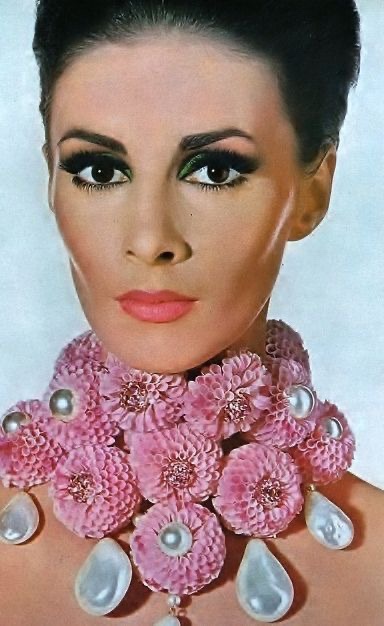
For early Sixties polish, go smaller and neater with a structured handbag, simple earrings, gloves or your newly fashionable pillbox. Then loosen everything up for the late Sixties. Long pendants, beads, scarves, wider belts and fringed bags immediately change the mood.
I tend to choose one or two obvious vintage references rather than wearing every recognisable piece at once. White boots, coloured tights and graphic earrings are already saying plenty. The dress itself can be perfectly simple.
Finish it with 1960s make up
You could wear the plainest black mini dress imaginable and still take the whole thing into the Sixties with your make up.
Eyes became a major focus through the decade. Mary Quant’s own beauty range is a fascinating example. The V&A’s history of Mary Quant make up describes the London look as having a pale, lightly made up face and lips with much more attention placed around the eyes. Quant also pushed beyond the conventional cosmetic colours available at the beginning of the decade, introducing much more playful shades across eyes, lips and nails.


And then, of course, there is Twiggy. Twiggy has spoken directly about creating the famous eye look she wore as a teenage Mod, using multiple upper lashes and drawing individual lashes beneath her eyes. She told Vogue that the lower lashes were inspired by a rag doll she had in her bedroom.
For ordinary Tuesday morning purposes, however, there is no requirement to draw six enormous lashes under each eye before getting on the bus. A little pale shadow, defined lashes, liner and a soft pink or peach lip gets the idea across perfectly well.
Final Thoughts
The reason I keep coming back to the Sixties is that there really is no single Sixties look.
You can be immaculate in a little skirt suit on Monday, wear a mini and white boots on Saturday, then turn up in suede and paisley on Sunday and still have plenty of historical justification for all three.
Which makes shopping the high street much easier. Don’t worry about finding something labelled “1960s inspired”. Look at the shape. Look at the colour. Think about what you would wear with it.
Then use the real clothes of the period as your reference point. Have a wander through my 1960s Mod guide, Twiggy style guide, Colleen Corby feature and 1960s make up tutorial if you want more ideas.
And when you spot a suspiciously Jackie looking little hat or a pair of Courrèges worthy white boots tucked between all the modern pieces, well. You know what to do.
Until next time, stay delightful.